
Drywall Cracks Keep Coming Back After Patching? Why the House Is Moving
August 6, 2026
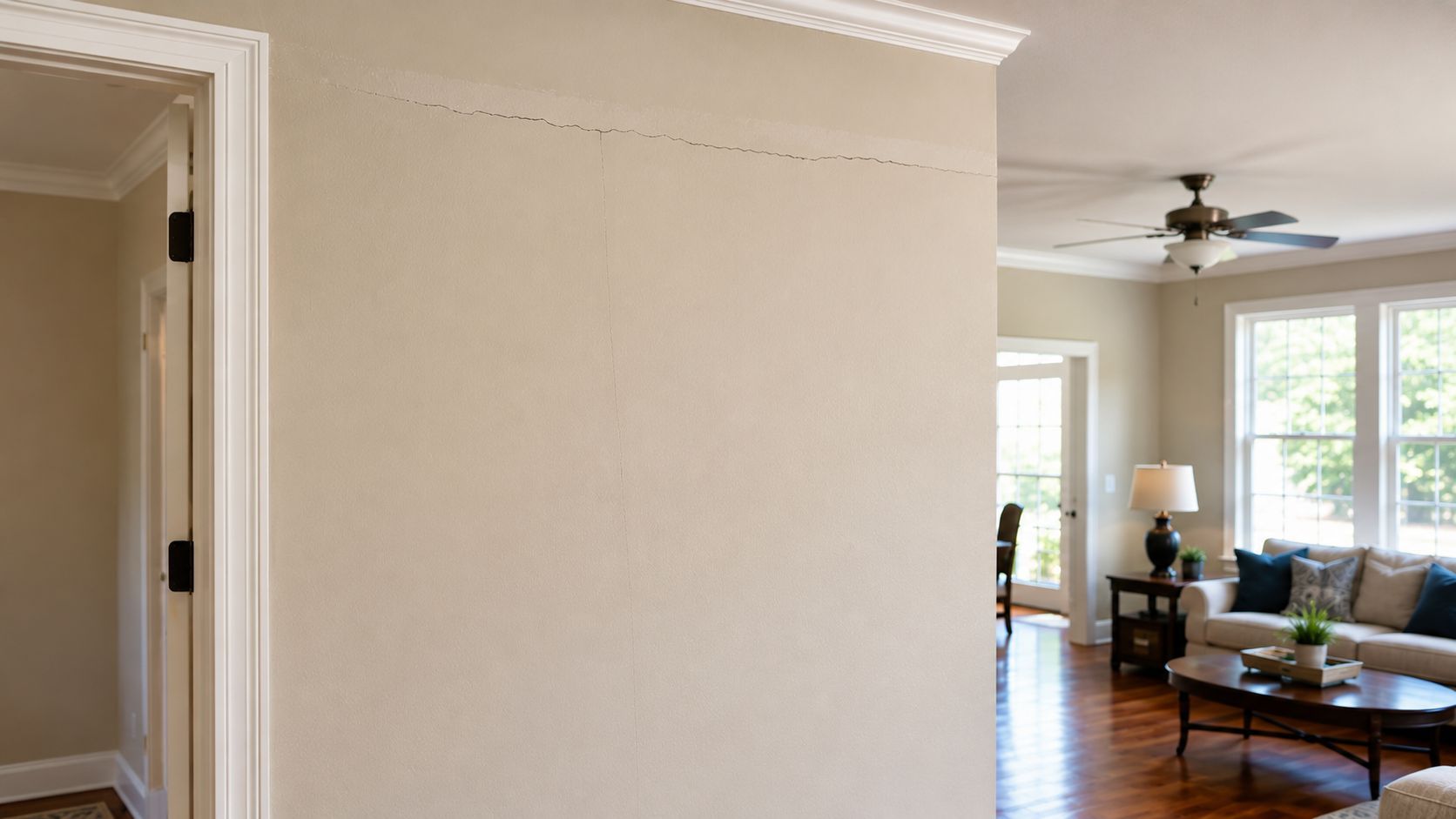
QUICK ANSWER: When a drywall crack returns after you've patched, sanded, and repainted it, the wall isn't the problem, the framing behind it is. Seasonal humidity swings, lumber that shrinks and swells, settling foundations, undersized fasteners, and stress at butt joints and off-angle corners all cause small amounts of movement in the structure. Spackle and paint cover the crack but do nothing to control that movement, so the same line reopens along the same seam. A repair that lasts has to address the movement first, not just the surface.
You've patched that crack over the door twice now. Maybe three times. Each time it looks great for a few months, then a hairline appears in the same place, wanders a little further, and by next year you're back out with the putty knife. It's tempting to assume the last patch job was rushed or the paint was wrong, but a crack that keeps returning in the same spot is telling you something specific: whatever caused it the first time is still active. Drywall itself doesn't crack on its own. Something behind it is moving, and until that movement is addressed, no amount of joint compound will hold.
Why the Same Crack Keeps Reopening
Drywall is a rigid material glued and screwed to a frame that isn't rigid at all. Wood framing, sheathing, and the joints between panels all expand, contract, and flex in small amounts as temperature and humidity change through the year, and as the house itself settles over time. A crack forms when the drywall can't stretch or compress along with whatever is happening behind it, so it splits at its weakest point, usually a seam, a corner, or a spot where two pieces of board meet.
Patching alone fixes the visible symptom. Compound and tape are strong once cured, but they're bonded to a surface that's still being pulled or pushed by the framing underneath. If that pulling and pushing continues, the new patch takes the same stress the old one did, and it fails the same way, at the same line, because that's still the weakest point in the wall. Homeowners often replace paint color or use a heavier compound thinking that'll hold it, but the material doing the work isn't the issue. The motion behind it is.
Where These Cracks Tend to Show Up
The location of a recurring crack is one of the best clues to what's causing it.
Above doors and windows
This is the most common spot for a returning crack, and it's rarely random. Headers over openings concentrate stress from the framing above them, and any seasonal shift in the lumber shows up here first, as a diagonal or horizontal line running from the corner of the frame.
Where two ceilings meet, or along a ceiling-wall joint
Long, straight cracks that trace the seam between the ceiling and wall, or run the length of a hallway ceiling, usually point to truss or joist movement rather than anything wrong with the finish itself.
At butt joints, where two sheets of drywall meet end to end
These joints don't have the tapered edge that seam joints have, so they carry more visible stress when the boards shift even slightly, and cracks along a butt joint tend to reappear quickly after a patch.
In inside corners, especially on vaulted or cathedral ceilings
Off-angle corners are under constant stress because the framing on either side of the angle moves independently. A crack running down the peak of a vaulted ceiling is one of the most persistent types you'll deal with.
Noticing exactly where your crack keeps forming, and whether it follows a straight seam versus cutting diagonally across the drywall itself, tells you a lot about whether it's normal seasonal movement or something that needs a closer look.
What's Actually Moving Behind the Wall
A few specific mechanisms account for most repeat cracking.
Seasonal humidity and temperature swings
Wood framing absorbs and releases moisture with the seasons. In a humid summer, joists and studs swell slightly; in a dry winter, especially with the furnace running, that same lumber shrinks back. That cycle repeats every year, and each cycle puts a small amount of stress on the same seams and corners. In homes around Fredericksburg and Spotsylvania, where summer humidity and winter freeze-thaw swings are both pronounced, this seasonal movement is one of the most common reasons a crack that was patched in spring reopens by the following winter.
Truss uplift
In homes built with manufactured roof trusses, the bottom chord of the truss sits buried in ceiling insulation while the rest of the truss is exposed to the attic's temperature and humidity. During cold months, the insulated bottom chord stays relatively dry and stable while the upper truss members react to attic conditions, and the mismatch causes the truss to bow slightly upward. That pulls the ceiling drywall with it right at the wall-ceiling corner, producing a crack that shows up every winter in the same location and can close back up somewhat once warmer weather returns.
Foundation settling
All houses settle to some degree as soil compacts under the weight of the structure, and older homes, or homes built on soil with more clay content, tend to settle unevenly. Even small, gradual shifts transfer up through the framing and concentrate at drywall seams and corners, often at the same predictable spots year after year.
Undersized or missing fasteners
Drywall that wasn't screwed into enough framing members, or that used nails instead of screws, has more freedom to move independently of the studs behind it. Popped fasteners and cracks along a stud line are frequently a sign that the board was never fully secured to begin with, which means normal building vibration and minor movement translate directly into stress on the tape and compound.
Tape and joint type mismatches
Paper tape holds up well on flat seams but is more prone to cracking at points under active stress, like butt joints or off-angle corners, where a mesh tape combined with a setting-type compound handles movement better because it distributes stress across a wider area rather than concentrating it along one folded edge. A repair that used the wrong tape for a high-stress location is often part of why it failed again so quickly.
TIP: Before assuming the worst, watch the crack through a full season. Take a photo with a ruler or coin next to it, then check again in three or four months. If it's the same width and length, you're most likely looking at normal seasonal movement, which is manageable with the right repair approach. If it's visibly wider, longer, or has appeared alongside other issues nearby, that's worth a closer look rather than another quick patch.
Why a Simple Patch Doesn't Hold
Spackles and paint are cosmetic materials. They fill a gap and blend the surface, but they have no ability to flex or absorb the small, repeated movements described above. Even a careful patch job, done with the right compound and properly sanded, is only as durable as the surface it's bonded to, and if that surface keeps shifting the same way it did before, the bond eventually gives out along the same line.
A repair built to last approaches the problem differently. Instead of just filling the crack, it addresses the connection between the drywall and the framing at that specific point, sometimes with a flexible joint product designed for movement, sometimes by re-securing loose fasteners, sometimes by bridging the crack with mesh tape and a setting compound that holds up better under repeated stress than a quick paper-tape patch. In cases where truss uplift is the cause, the fix may involve detaching the drywall from the truss for a short distance near the wall so the ceiling can move independently of the wall framing without cracking. None of that is visible from the surface, which is exactly why the same cosmetic patch keeps failing in the hands of anyone who doesn't address what's underneath.
When It's More Than Normal Movement
Most recurring drywall cracks are a nuisance rather than a warning sign, but a few patterns are worth taking seriously.
WARNING: Pay closer attention if a crack runs diagonally from the corner of a door or window frame, widens noticeably over a short period, or appears alongside doors and windows that have started sticking or no longer latch properly. Cracks that follow a straight vertical or horizontal seam are usually ordinary seasonal movement, but a diagonal crack that keeps growing, especially paired with sticking doors, gaps at baseboards, or uneven floors, can point to more significant structural settling that goes beyond what a drywall repair alone will solve. That combination is worth a professional look before doing any more patching.
Beyond that specific pattern, cracks that appear suddenly after a heavy rain, near plumbing, or accompanied by staining or a musty smell point to moisture rather than structural movement, and that's a separate issue that needs to be traced to its source before any drywall repair will hold.
Getting Ahead of a Recurring Crack
If you've patched the same spot more than once, it's worth stepping back and treating the crack as a symptom rather than the actual problem. Note where it is, how it's oriented, whether it changes with the seasons, and whether anything else nearby, sticking doors, uneven flooring, gaps around trim, has changed at the same time. That information is what separates a simple re-tape from a repair that actually needs to account for ongoing movement in the framing.
A crack that keeps coming back isn't a sign you did something wrong with the last patch. It's the wall telling you, in the only way it can, that something behind it is still moving. Address that movement directly, and the next repair holds instead of becoming the third or fourth attempt at the same spot.
Frequently Asked Questions
Why does my drywall crack keep coming back after I patch it?
Because the patch fixes the visible surface but not the movement causing it. Seasonal humidity shifts, truss uplift, minor foundation settling, loose fasteners, or the wrong tape for a high-stress joint all keep stressing the same spot, so a cosmetic repair reopens along the same line.
Is a crack that reappears every winter something to worry about?
Usually not on its own. Cracks that open and partially close with the seasons, especially along ceiling-wall corners, are commonly tied to truss uplift or normal humidity cycles and are more of a recurring nuisance than a structural concern.
What's different about a repair that actually holds?
It addresses the connection point, not just the gap. That might mean re-securing loose fasteners, using mesh tape and a setting-type compound at a high-stress joint, installing a flexible joint product where two materials meet, or, for truss uplift, allowing the ceiling drywall to move independently of the wall near the corner.
When does a recurring crack mean something more serious?
Pay attention to diagonal cracks at door or window corners that keep widening, especially if doors start sticking or floors feel uneven at the same time. That combination suggests structural settling rather than routine seasonal movement and is worth having assessed before more patching.
Can I just use a stronger compound to stop it from cracking again?
Not by itself. Compound strength doesn't change the amount of movement happening behind the wall. The tape type, the fastening, and in some cases how the drywall is attached near the stress point matter more than which compound goes over the top.
Understanding Recurring Drywall Cracks Over Time
Recurring drywall cracks are rarely about poor patching technique alone. More often, they reflect how a house naturally responds to seasonal moisture changes, framing movement, or gradual settling throughout its life. Looking beyond the surface and recognizing the pattern behind a crack helps explain why some repairs last while others reopen. Understanding the underlying cause makes future maintenance more predictable and prevents repeated cosmetic fixes from becoming an ongoing cycle.
For 15
years, Dynamic Innovation, LLC
has helped homeowners throughout Fredericksburg, Stafford & Spotsylvania, VA identify the real reasons drywall cracks continue returning instead of simply covering them again. Whether movement comes from normal seasonal changes or a condition that deserves closer attention, recognizing the difference leads to repairs that better match how the home actually behaves, allowing finished walls to remain stronger and more consistent over time.