
Doors and Windows Sticking Seasonally? Why Framing and Settling Are to Blame
October 21, 2026
QUICK ANSWER: Doors and windows stick seasonally because wood swells and shrinks with humidity, and because the house frame shifts slightly as soil, framing members, and the foundation move through the year. Humidity alone usually causes a mild, predictable rub. A door that binds at one corner, a window that racks in its opening, or gaps that change shape from season to season point to framing movement or settling. Planing the edge of a door only hides the symptom, so the real fix starts with finding out whether the opening itself has gone out of square.
Every June it starts the same way. The bedroom door that closed with a soft click all winter now needs a shoulder to latch. The kitchen window that slid open with one finger takes both hands. You planed the door edge two summers ago, and now in January it swings open on its own and leaves a gap you can slide a finger through. Something keeps changing, and it changes with the calendar.
Most people blame humidity, and humidity is part of the story. But if the same doors and windows misbehave year after year, or if the problem keeps getting worse, the weather is rarely the whole answer. The opening that holds the door or window is part of a wooden frame, and that frame sits on a foundation that is moving a little more than you would expect. Understanding how those pieces work together tells you whether you have a nuisance or a warning sign.
Why Humidity Gets Blamed First
Wood is a natural material that absorbs moisture from the air and gives it back when the air dries out. A solid wood door, a wood window sash, and the jambs and casings around them all swell in humid weather and shrink in dry weather. Across the grain, a board can change width by a noticeable amount between a damp August and a dry February.
That is why doors tend to rub on the latch side in summer. The slab grows slightly wider, the gap around it closes, and the edge drags on the jamb. In Fredericksburg, Stafford, and Spotsylvania, summers bring long stretches of heavy, humid air, and many homes have older doors that were never sealed on all six sides. Raw wood at the top and bottom edges of a door drinks in moisture faster than the painted faces do, which is why a door often sticks at the very top corner or along the bottom.
If humidity were the only cause, the pattern would be simple. The door would rub evenly along its edge in summer, loosen in winter, and return to normal each year. When the rub is uneven, when it sticks at only one corner, or when it gets worse every year, something else is going on.
What Framing Has to Do With It
A door or window does not hang in empty space. It hangs inside a rough opening, which is a box built from framing lumber. That opening has a header across the top, jack studs on each side, and a sill or subfloor below. For a door to swing freely, that box must be plumb, level, and square. When it drifts even a quarter inch out of square, the door cannot sit evenly in its jamb.
Framing lumber moves too. Studs, headers, and floor joists release or absorb moisture as they age, and they can shrink, twist, or bow. Lumber that was a little wet when the house was built dries out over the first several years and pulls the opening slightly out of shape. A long header over a wide window or patio door can sag a small amount over time if it was undersized or if the load above it changed. That sag is enough to pinch the top of the sash or door.
Floor framing matters as well. If a joist beneath a doorway sags or a subfloor softens, the whole opening drops on one side. You see it as a door that suddenly drags on the floor or a gap that opens at the top of the jamb. Seasonal humidity can make that movement more noticeable, because swollen wood presses against an opening that has less room than it used to.
TIP: Close the door slowly and look at the gap between the door and the jamb on all three sides. An even gap that simply narrows in summer points to humidity. A gap that is tight at the top latch corner and wide at the bottom, or the reverse, suggests the opening has moved out of square.
How Settling Changes the Picture
Settling is the slow downward or sideways shift of a house as the ground beneath it responds to moisture and load. Much of Central and Northern Virginia sits on clay rich soil. Clay swells when it is wet and shrinks as it dries, which means the ground under and around a foundation is not completely still. In a dry late summer the soil pulls back, and after a wet spring it pushes up. Over many seasons those small movements add up.
Older homes in historic parts of Fredericksburg and the surrounding counties often have foundations that were built long before modern practices. Stone, brick, and early block foundations can shift at the corners or settle under one side of the house more than the other. Newer homes are not exempt. Fill soil that was compacted unevenly during construction can settle for years afterward, especially near an addition, a garage, or a porch tied into the main house.
When one section of the foundation drops even a fraction of an inch, the framing above it follows. Door and window openings are the weakest points in a wall, so that movement shows up there first. You may notice diagonal cracks that run from the corner of a
window or door frame, a threshold that no longer sits flat, or interior doors on the same floor that all rub in different places. The winter freeze and thaw cycle adds another layer, because frost can lift soil near a foundation and then let it settle back down in spring.
Clues That Point to Settling or Framing Movement
A few patterns help separate a seasonal annoyance from a structural clue.
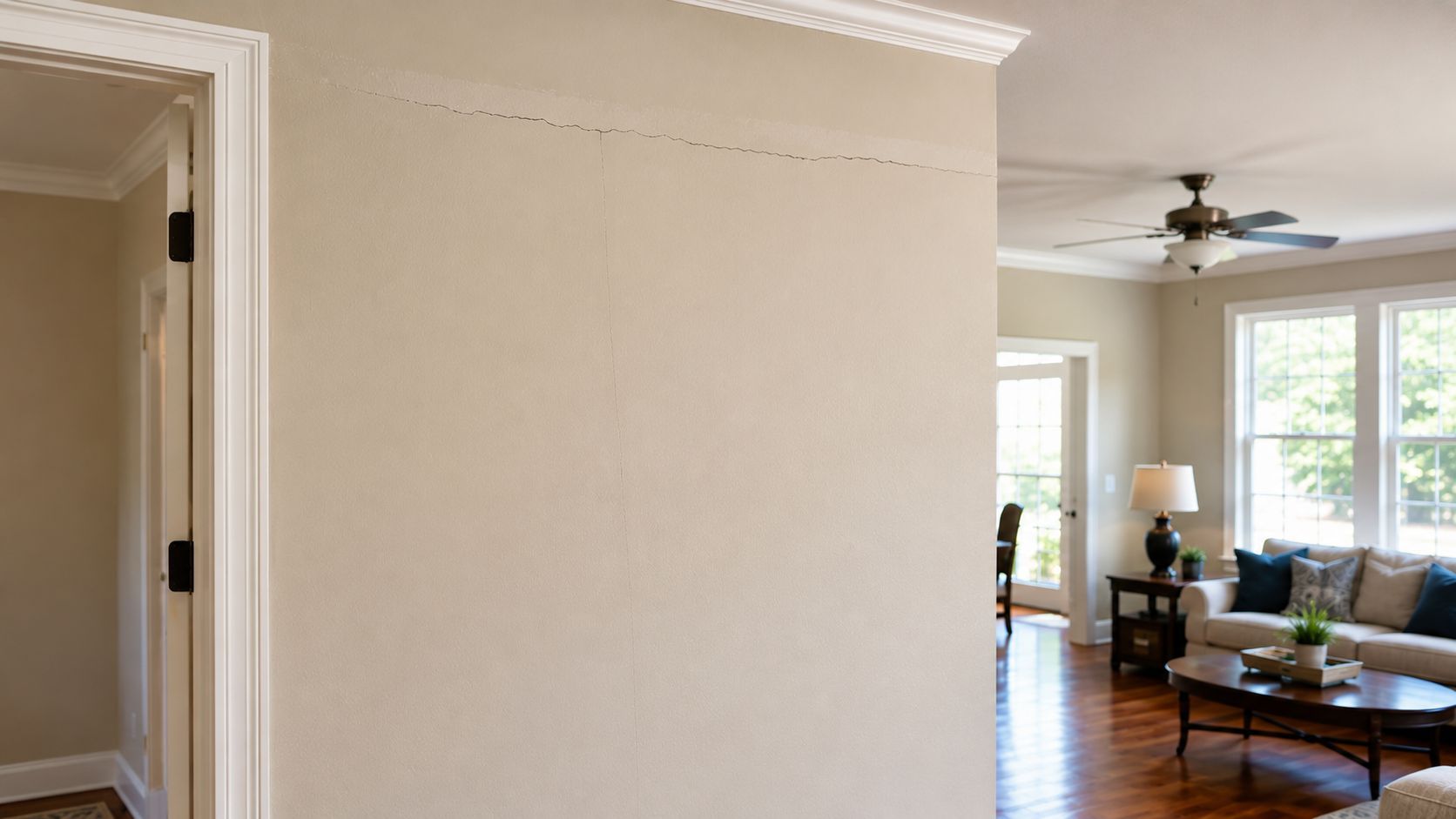
Cracks that start at the corners of doors and windows and travel up or down at an angle are one of the most common signs. Drywall and plaster crack at those corners because the opening is flexing. If you patch the crack and it returns in the same place, the opening is still moving.
Doors that will not stay latched or swing open or closed by themselves usually mean the jamb has tilted out of plumb. A level held against the jamb will confirm it. Windows that have become hard to open in every season, not only summer, often sit in an opening that has racked into a slight parallelogram.
Gaps between the trim and the wall, or between baseboards and the floor near an opening, also tell a story. Trim is nailed to the framing, so when the framing moves, the trim separates from the drywall. A caulk line that cracks open again every year in the same spot is another hint.
Finally, notice whether the problem is spread across the house or concentrated in one area. If every door in the home sticks in July, humidity is the likely cause. If only the doors on one side of the house or one level are affected, look at the framing and foundation under that area.
Humidity Fixes That Actually Help
If the evidence points to seasonal swelling, there are sensible steps that work without touching the structure. Sealing every edge of a door with paint or a clear finish slows the moisture exchange, and that includes the top and bottom edges that are easy to skip. Running a dehumidifier in a damp basement or crawl space and using bathroom and kitchen exhaust fans lowers the moisture load on the whole house. Keeping the home between about 30 and 50 percent relative humidity throughout the year reduces how much the wood has to move.
Weatherstripping, hinges, and strike plates are worth checking as well. A loose hinge screw can let a door sag a sixteenth of an inch, which feels like swelling. Longer screws that bite into the framing behind the jamb often pull the door back into place.
WARNING: Do not keep planing or sanding the edge of a door each summer to stop it from sticking. Once the weather dries out, the door will shrink and leave a gap, and the bare wood you exposed will absorb moisture even faster. If the door sticks again after being trimmed, the opening is likely moving.
What a Proper Repair Looks Like
When the cause is framing or settling, the repair has to start with the opening, not the door. A careful contractor checks the jamb for plumb and level, measures the diagonals of the opening to see whether it has racked, and looks at the framing around it for sagging headers, soft sills, or loose connections. The floor below and the foundation near the opening get a look too, since that is often where the movement began.
Depending on what is found, the work might include shimming and hanging again a door in a squared jamb, reframing a rough opening that has gone out of shape, replacing a damaged sill or header, or reinforcing the floor framing beneath a doorway. Windows that no longer sit square may need to be removed, the opening corrected, and the unit reinstalled with proper flashing and insulation so it operates smoothly and seals tight. Trim and casing are then fitted to the corrected opening, so the gaps close and stay closed.
If the foundation itself is shifting, cosmetic repairs will not last. A new door hung in an opening that continues to move will begin to bind again within a season or two. In that case the right step is to have the movement evaluated and addressed before investing in new doors, windows, or finish carpentry. Patience here pays off, because fixing things in the right order is what makes the repair last.
Frequently Asked Questions
Why do my doors stick in summer but not in winter?
Wood swells as it absorbs moisture from humid summer air and shrinks as the air dries in winter. Mild sticking that is even along the edge and reverses with the season points to humidity.
How can I tell whether sticking is humidity or settling?
Look at the pattern. Humidity affects most doors in a similar way and reverses with the season. Settling affects doors in one area, causes uneven gaps, and brings corner cracks that return after patching.
Is a sticking window a sign of a foundation problem?
Not by itself. Paint buildup, swollen sashes, and dirty tracks are common culprits. A window that sticks every season, looks crooked in its opening, or shows corner cracks deserves a closer framing look.
Should I plane a sticking door?
A small adjustment is reasonable if the cause is seasonal swelling and you seal the bare edge afterward. If you have trimmed the door before and it returned, the opening probably needs attention instead.
Do older Virginia homes have more trouble with this?
Often they do. Older homes have had more years of wood movement, many have original framing and older foundations, and clay rich soil swells and shrinks with moisture. A proper diagnosis stays worthwhile regardless.
Can a humidity problem and a framing problem happen together?
Yes, and they often do. A framing issue narrows the clearance around a door, and then summer swelling pushes it past the point where it binds. A door can seem fine for years beforehand.
Will a dehumidifier fix doors that stick?
It helps when humidity is the cause, especially in basements and lower levels. It will not correct an opening that is out of square, so continued sticking after humidity control points to something structural.
When should I call a professional?
Call when sticking comes with diagonal cracks, sloping floors, doors that will not latch, windows stuck in every season, or gaps that keep returning. Those signs mean the opening and framing deserve a closer look.
Let The Pattern Tell You The Cause
A door that sticks in July and swings loose in January is telling you how your house moves through the year. Sometimes the message is simple, and a little sealing and ventilation will settle it for good. Other times it points to framing that has shifted or a foundation that is slowly settling, and the earlier that is understood, the easier it is to correct. Paying attention to the pattern, the corner cracks, and the changing gaps reveals which kind of problem you have.
Dynamic Innovation, LLC
has spent 15
years watching how homes across Fredericksburg, Stafford & Spotsylvania, VA respond to humid summers and freeze and thaw winters, and the lesson repeats every season: the opening, not the door, holds the answer. Reading the jamb, the header, and the floor framing together is what separates a passing nuisance from a structural shift. When each opening is checked in the right order, the fix lands on the real cause and the door finally stays the way it was hung.